Is India the Next AI Superpower? Global Tech Giants Bet $48 Billion on Digital Growth
Major global technology firms are pouring billions into India’s AI infrastructure, signaling a massive shift in the global digital economy.
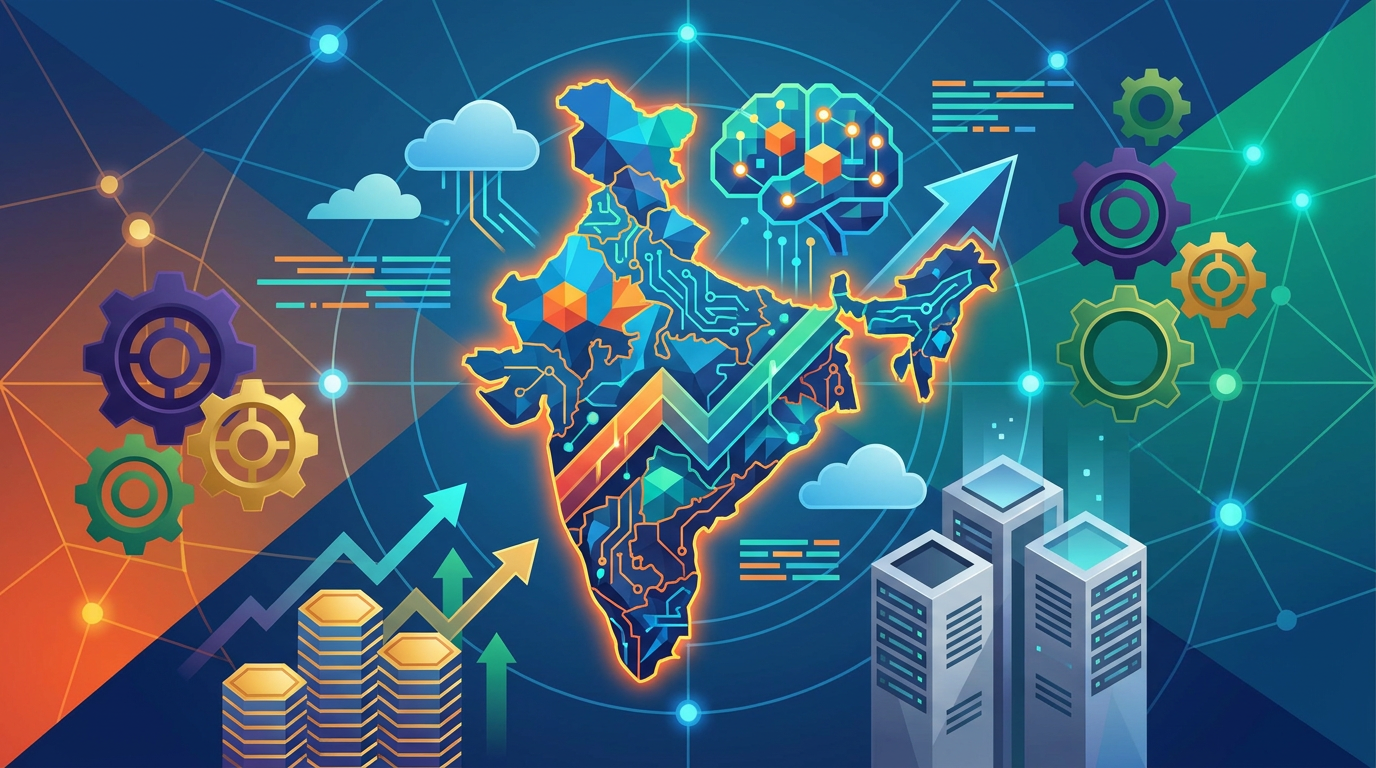
India is rapidly positioning itself as a central player in the global artificial intelligence revolution. Recent announcements from major technology firms suggest that the country is no longer just a consumer of digital services but a critical hub for AI development and infrastructure. Prime Minister Narendra Modi recently met with global tech leaders to discuss a shared roadmap for governance and innovation, highlighting the growing international confidence in the Indian economy. As Silicon Valley looks for the next big growth engine, India has emerged as the primary destination for high-stakes technology investments.
Amazon Leads the Charge with $48 Billion Commitment
Amazon has announced a record-breaking investment of $48 billion in India, scheduled to be deployed between 2026 and 2030. This marks one of the largest foreign direct investments in the country's history. According to a statement from Amazon CEO Andy Jassy, a significant portion of this capital will be used to expand Amazon Web Services (AWS) cloud infrastructure and data center capacity. The company plans to focus its infrastructure growth in Mumbai and Hyderabad, creating a backbone for the next generation of digital startups and government services.
This investment brings Amazon's cumulative commitment to India to over $88 billion. Beyond just hardware, the firm aims to train more than 10 million Indians in cloud skills and digitize millions of small businesses. The move is seen as a direct response to the increasing demand for AI-driven services across the Indian subcontinent.
Google Establishes Major AI Hub in Visakhapatnam
Google is also deepening its roots in India by starting work on its largest AI hub outside of the United States. The new facility in Visakhapatnam (Vizag) is described by the company as a "concrete milestone" in its commitment to India's digital future. This hub will focus on developing advanced machine learning models and AI applications tailored for the local market. The choice of Vizag signals a shift in technology hubs moving beyond traditional cities like Bengaluru and Hyderabad to other emerging Indian metros.
The AI Impact Summit in New Delhi
New Delhi recently hosted the AI Impact Summit 2026, drawing over 250,000 visitors and delegations from 45 countries. The five-day event featured world leaders including French President Emmanuel Macron and Brazilian President Luiz Inacio Lula da Silva. The summit aimed to establish a "New Delhi Declaration"—a non-binding pledge focusing on global AI governance and the ethical use of technology.
Key themes at the summit included: * Global Collaboration: Bridging the gap between advanced economies and the Global South. * Digital Infrastructure: Scaling AI using India's existing digital payment and identity platforms. * Safety and Ethics: Addressing job disruption, child safety, and misinformation.
Despite the high-level participation, the event faced some logistical challenges, with attendees reporting overcrowding and security sweeps that temporarily cleared exhibition halls.
Reshaping the Indian Job Market
As artificial intelligence becomes more integrated into the workplace, experts at the Hindu Huddle 2026 discussed the future of labor. Industry veterans, including former NASSCOM president Debjani Ghosh, argued that while AI will automate routine tasks, it also introduces the "human sandwich model." In this model, humans are required at the beginning to frame questions and at the end to verify the AI's output.
While there are fears about job losses, particularly at the entry level, many analysts believe the real challenge lies in redesigning the education system. India needs to prepare its youth to work alongside AI agents rather than competing against them. The focus is shifting toward task-based work rather than rigid job roles.
Strategic Incentives and Infrastructure Growth
To support this technological shift, the Indian government has earmarked $20 billion for AI-related incentives. This funding is designed to encourage domestic chipmaking and the development of local computing infrastructure. The goal is to ensure India captures at least 10% of the projected $17.6 trillion in global value that AI is expected to create over the next five years. Companies like Yotta Data Services are already scaling up to provide the necessary GPU power required for training large language models within the country.
AI in Agriculture and Healthcare
India's strategy involves more than just building large language models. Leaders like B. Santhanam, former chairman of Saint-Gobain India, suggest that the country’s biggest opportunity lies in the "diffusion" of AI. By applying AI to sectors like agriculture, education, and healthcare, India can solve problems that were previously impossible for humans alone. For example, AI-powered agricultural tools developed for Indian soil are now being exported to other developing nations, showcasing India's role as a provider of low-cost, high-impact technology solutions.
This massive influx of capital and strategic focus suggests that India is well on its way to becoming a global technology powerhouse. While challenges in infrastructure and workforce training remain, the sheer scale of investment from Amazon, Google, and Microsoft indicates that the world is betting heavily on India's digital rise.
Frequently asked questions
›How much is Amazon investing in India for AI?
Amazon has committed a record $48 billion to be invested in India between 2026 and 2030. This funding is primarily aimed at expanding AWS cloud infrastructure and data centers in Mumbai and Hyderabad, supporting the country's growing demand for artificial intelligence and digital services.
›Where is Google building its new AI hub in India?
Google has started work on its largest AI hub outside the United States in Visakhapatnam (Vizag). This facility represents a major milestone in Google's commitment to India's digital future and will focus on developing AI technologies for the local and global markets.
›What was the purpose of the AI Impact Summit 2026?
The AI Impact Summit 2026 in New Delhi aimed to create a shared roadmap for global AI governance. It brought together world leaders and tech executives to discuss AI's role in shaping humanity, inclusive growth, and addressing issues like job displacement and ethics.
›What is the 'human sandwich model' in the context of AI?
The 'human sandwich model' is a workflow concept where humans are essential at two stages: first, to frame the questions and provide inputs for the AI, and second, to verify and validate the AI's final output to ensure accuracy and ethical standards.
›How much has the Indian government earmarked for AI incentives?
The Indian government has earmarked approximately $20 billion in incentives to boost the AI sector. This funding is intended to support chipmaking, computing infrastructure, and the development of local AI applications to keep India competitive in the global technology race.
›Which Indian cities are becoming major hubs for data centers?
Mumbai and Hyderabad are currently the primary targets for major data center expansions by global giants like Amazon. Additionally, Visakhapatnam is emerging as a significant location with Google’s recent announcement of a large-scale AI research and development hub there.
›What are the main challenges for India's AI ambitions?
Key challenges include a shortage of high-end computing infrastructure, the need to rapidly upskill millions of workers, and ensuring that AI development leads to value creation rather than just consumption. There are also concerns regarding job displacement at entry-level positions.
›Who were the key attendees at the New Delhi AI Summit?
High-profile attendees included Prime Minister Narendra Modi, French President Emmanuel Macron, and Brazilian President Luiz Inacio Lula da Silva. Tech leaders like Sundar Pichai (Google), Sam Altman (OpenAI), and Brad Smith (Microsoft) were also expected to participate.
›How will AI impact small businesses in India according to Amazon?
Amazon aims to digitize 12 million small businesses in India. Through its investments, the company provides tools for e-commerce exports and cloud skills training, helping small enterprises integrate into the global digital economy and use AI to improve their efficiency.
›Is India focusing on creating its own AI models or using existing ones?
While India is developing its own infrastructure, experts suggest the country's strength lies in 'diffusion'—applying AI to solve specific problems in agriculture, healthcare, and education. This allows India to create unique value by tailoring AI solutions to the needs of the Global South.
Sources referenced
- Is India About to Become the World's AI Superpower? Latest News
- India's hosts AI Impact Summit, drawing world leaders, tech giants
- India news: Google starts work on largest AI hub outside US - DW.com
- AI will reshape jobs, but India's bigger challenge is preparing ... - The Hindu
- Inside India's AI Ambitions | Bloomberg Tech: Asia 8/28/2026
- Artificial Intelligence (AI) News Updates - The Economic Times