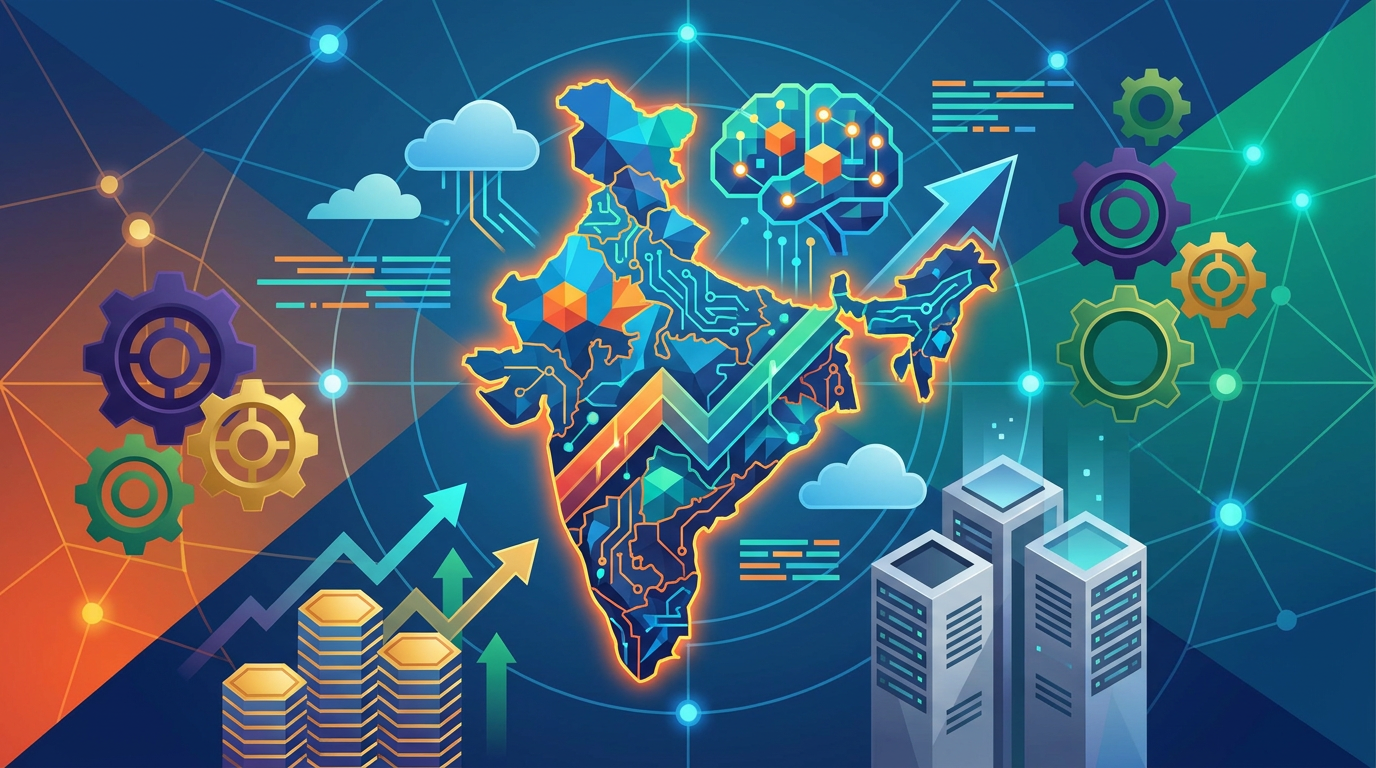
India Positions as Global AI Hub at New Delhi Impact Summit Amid Sovereignty Debates
India hosts world leaders and tech CEOs for the AI Impact Summit 2026, focusing on a roadmap for global governance while navigating new restrictions on foreign AI models.
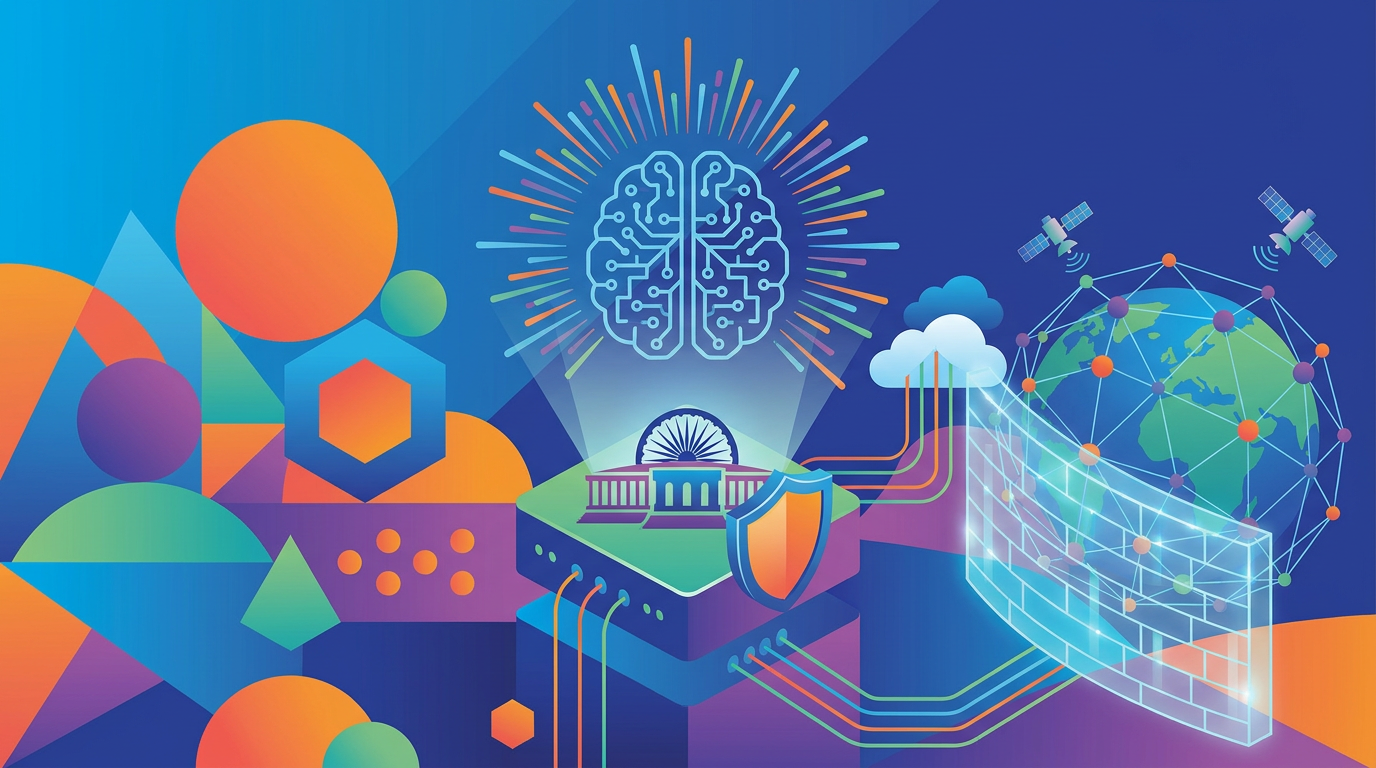
India has taken center stage in the global technology landscape by hosting the five-day AI Impact Summit in New Delhi. The event, inaugurated by Prime Minister Narendra Modi, brought together heads of state, ministerial delegations, and the world’s most influential tech executives to discuss the future of automation. According to official statements, the summit aims to establish a shared roadmap for global AI governance and collaboration, focusing on the "three sutras" of people, progress, and planet.
While the summit highlights India's technological progress, it also coincides with a growing debate regarding technological sovereignty. Recent moves by international firms like Anthropic to restrict access to their latest models for foreign nationals have sparked discussions among Indian tech leaders. This situation has intensified the push for India to develop its own foundational AI models rather than relying solely on technologies controlled by foreign entities.
Global Leaders and Tech Giants Convene in Delhi The AI Impact Summit 2026 saw a massive turnout, with the Indian government expecting nearly 250,000 visitors. High-profile attendees included French President Emmanuel Macron and Brazilian President Luiz Inacio Lula da Silva. From the corporate world, Google CEO Sundar Pichai, OpenAI’s Sam Altman, and Microsoft President Brad Smith were scheduled to participate in sessions covering everything from generative AI to defense systems.
Prime Minister Modi noted on social media that the summit serves as proof of India's rapid progress in science and technology. The event is being used to project India as a bridge between the advanced economies of the West and the Global South. By leveraging its experience in large-scale digital public infrastructure, such as UPI and Aadhaar, India hopes to offer a model for affordable and inclusive AI deployment.
Navigating the Challenges of AI Sovereignty A significant talking point on the sidelines of the summit was the sudden restriction of high-end AI models by US-based companies. Anthropic recently suspended access to its newest Fable 5 and Mythos 5 models for foreign nationals following a US government directive. This move came shortly after the company had announced a partnership with Tata Consultancy Services (TCS) to scale enterprise AI in India.
Industry experts in India are now debating whether the country can afford to remain dependent on external providers. The suspension of access serves as a wake-up call for the domestic industry to invest more heavily in indigenous research. Many Indian startups and tech giants are now calling for a national strategy that prioritizes the development of local large language models (LLMs) to ensure business continuity.
Logistics and Organizational Hurdles Despite the high-level attendance, the summit faced criticism regarding its organization. On the opening day, several delegates reported long queues, overcrowding, and a lack of clear instructions at the New Delhi venue. Security sweeps for arriving leaders led to the sudden clearing of exhibition halls, leaving many startup founders unable to access their own booths.
Maitreya Wagh, co-founder of the AI voice startup Bolna, shared on social media that he was locked out of his booth due to gate closures. Some participants even suggested moving informal meetings to nearby cafes in Connaught Place to bypass the logistical confusion. These lapses highlighted the challenges of hosting a global event of this scale within the heart of the capital.
Human Rights and Mass Surveillance Concerns Not all feedback regarding India's AI trajectory has been positive. Human rights organizations, including Amnesty International, raised concerns during the summit about how AI is being deployed within the country. Erika Guevara Rosas of Amnesty International stated that the rhetoric of the summit often contrasts with the reality of how these systems are used on the ground.
- Facial Recognition: Concerns were raised about the expansion of facial recognition technology in cities like Hyderabad.
- Automated Systems: Reports suggest that automated social protection systems in states like Telangana have occasionally excluded eligible citizens from food and housing benefits.
- Privacy Risks: Advocates argue that mass surveillance systems are being expanded without sufficient binding rights protections.
The New Delhi Declaration on AI Governance The summit is expected to conclude with a non-binding "New Delhi Declaration." Unlike a formal treaty, this document will likely outline general goals for AI development, safety, and ethical use. This follows the trend of previous summits in Paris and Seoul, where nations agreed on principles rather than strict regulations.
India’s Minister for Electronics and IT, Ashwini Vaishnaw, emphasized that the ultimate goal is for AI to be used for "shaping humanity" and sustainable growth. The government is pushing for a regulatory framework that encourages innovation while protecting users from the risks of deepfakes and misinformation. However, critics argue that without binding rules, the gap between corporate power and public safety will continue to widen.
Corporate Expansion and the Chip Boom Beyond governance, the summit also served as a marketplace for major business deals. Nvidia recently signaled that the AI spending boom has years left to run, forecasting significant sales growth. Meanwhile, Indian IT firms like Marvell and TCS are deepening their ties with global chipmakers to build the infrastructure needed for the next generation of AI agents.
In the domestic market, Lenovo India reported surpassing $2 billion in revenue, driven by an expanded focus on AI-integrated manufacturing. As global firms look for new hubs for semiconductor investment, Vietnam and India are competing to attract giants like Qualcomm and Samsung. The summit showcased that India is no longer just a back-office for tech but a primary market for high-end hardware and software development.
As the AI Impact Summit 2026 comes to a close, the takeaway for the Indian tech industry is clear: while global collaboration is essential, building domestic capability is the only way to ensure long-term stability in an increasingly restricted geopolitical environment.
Frequently asked questions
›What is the main goal of the AI Impact Summit 2026?
The summit aims to create a global roadmap for AI governance and collaboration. It focuses on using technology for inclusive growth, safety, and sustainable development while bridging the gap between advanced economies and the Global South through India's digital public infrastructure model.
›Which global leaders attended the summit in New Delhi?
Prominent leaders including French President Emmanuel Macron and Brazilian President Luiz Inacio Lula da Silva attended. They were joined by major tech CEOs like Sundar Pichai of Google, Sam Altman of OpenAI, and Microsoft President Brad Smith to discuss global technology standards.
›Why was there criticism regarding the organization of the summit?
Attendees reported significant logistical issues, including long queues, overcrowding, and poor signage. Security sweeps for high-level officials led to sudden hall evacuations, preventing some startup founders from accessing their exhibition booths during the event.
›What are the 'three sutras' mentioned by the Indian government?
The summit was organized around three core themes known as the 'three sutras': People, Progress, and Planet. These themes were intended to guide discussions on how artificial intelligence can benefit humanity while ensuring environmental sustainability and economic advancement.
›What is the controversy regarding Anthropic and Indian access?
Anthropic recently suspended access to its latest AI models, Fable 5 and Mythos 5, for foreign nationals due to a US government directive. This has sparked a debate in India about the risks of relying on foreign-controlled AI technology for critical business operations.
›How is India using its digital infrastructure to lead in AI?
India is leveraging its experience with large-scale systems like UPI (payments) and Aadhaar (identity) to demonstrate how AI can be deployed at a massive scale with low costs. This model is being presented as a blueprint for other developing nations.
›What human rights concerns were raised during the AI summit?
Amnesty International and other groups raised concerns about the use of AI for mass surveillance and facial recognition in India. They also highlighted issues where automated systems in the public sector reportedly excluded marginalized communities from social welfare benefits.
›Will there be a binding legal agreement after the summit?
It is unlikely. The summit is expected to result in the 'New Delhi Declaration,' which is a non-binding pledge or statement of goals regarding AI ethics and development, similar to outcomes from previous summits in Paris and Seoul.
›Which Indian companies are scaling their AI efforts?
Tata Consultancy Services (TCS) recently partnered with Anthropic to scale enterprise AI. Additionally, Lenovo India has seen a revenue surge to $2 billion by expanding its AI-focused manufacturing, and various voice AI startups like Bolna are gaining prominence.
›How does the summit address the risk of job disruption?
The agenda included discussions on how AI transforms labor markets. While leaders highlighted new opportunities, sessions also focused on the need for reskilling the workforce to handle the transition to an AI-driven economy without widespread unemployment.
Sources referenced
- India's hosts AI Impact Summit, drawing world leaders, tech ...
- As Anthropic suspends access to new models, India ...
- Artificial Intelligence - AI News
- Global/India: AI Impact Summit failed to rein in destructive ...
- AI news and everyday new statements from CEOs ...
- Artificial Intelligence (AI) News Updates