India Hosts Major AI Impact Summit as Google Breaks Ground on Global Tech Hub
Prime Minister Modi opens the AI Impact Summit in New Delhi while Google begins work on its largest artificial intelligence center outside the United States.
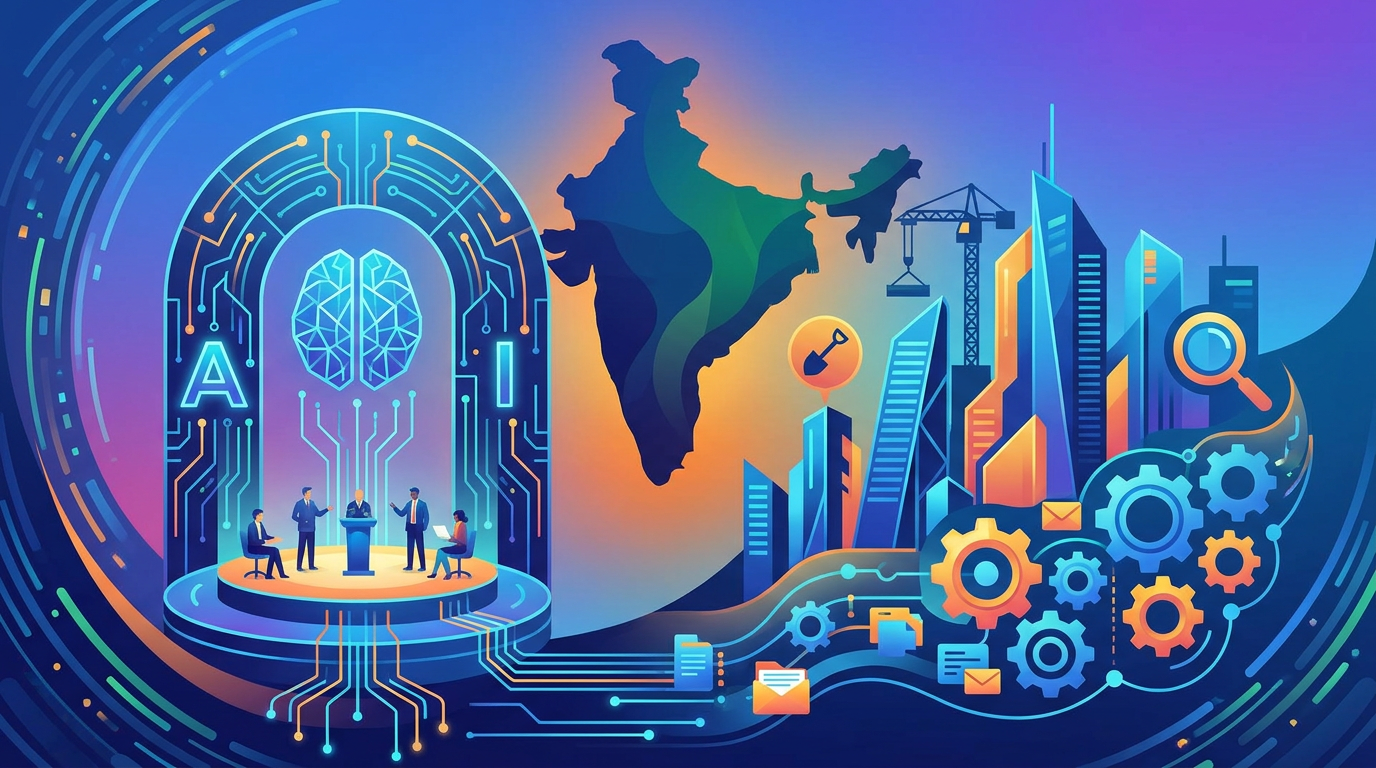
India is positioning itself at the center of the global technological landscape by hosting the AI Impact Summit in New Delhi. The five-day event has brought together world leaders, including French President Emmanuel Macron and Brazilian President Luiz Inacio Lula da Silva, alongside the heads of the world’s biggest technology firms. Prime Minister Narendra Modi inaugurated the summit, describing it as evidence of the country’s rapid progress in science and technology.
The gathering aims to create a shared roadmap for how artificial intelligence should be governed and used for human progress. With over 250,000 visitors expected, the summit covers critical themes such as job market disruption, child safety, and sustainable development. However, the opening days were marked by logistical challenges, including long queues and security sweeps that forced some startup founders to move their meetings to nearby cafes in Connaught Place.
Google launches massive AI hub in Visakhapatnam
While the capital debates policy, Google has started construction on a major artificial intelligence center in Visakhapatnam. This facility is set to be the company’s largest AI hub outside of the United States. Google officials described the project as a concrete milestone in their long-term commitment to the digital future of the country. This investment highlights how global tech giants are looking at the Indian market not just for users, but as a primary base for research and development.
The Visakhapatnam center is expected to focus on high-end AI applications. This move aligns with the government's push to transform the nation into a bridge between advanced economies and the Global South. By building large-scale digital public infrastructure, the country hopes to show the world how to deploy technology at scale while keeping costs manageable for developing nations.
The debate over technological sovereignty
The reliance on foreign technology has sparked intense debate among local industry leaders. A recent U.S. government directive forced the startup Anthropic to suspend access to its most advanced models, including Fable 5 and Mythos 5, for foreign nationals. This move has raised alarms in the Indian tech sector about the risks of depending on AI tools controlled by foreign powers.
Industry experts argue that these restrictions serve as a wake-up call. There is a growing demand for locally developed foundation models to ensure that the domestic industry is not vulnerable to sudden policy changes in other countries. The suspension occurred shortly after Anthropic had signed a partnership with Tata Consultancy Services, showing how geopolitical decisions can directly impact local enterprise growth.
Global leaders and CEOs gather in Delhi
The AI Impact Summit features a heavy-hitting guest list from the private sector. Among those attending are Google CEO Sundar Pichai, Microsoft President Brad Smith, and OpenAI CEO Sam Altman. Their presence underscores the importance of the Indian market in the race for AI dominance. The discussions are centered on three core pillars: people, progress, and planet.
- People: Focusing on child safety and protecting citizens from harmful AI-generated content.
- Progress: Exploring how AI can boost productivity and economic growth.
- Planet: Using advanced systems for climate modeling and sustainable energy solutions.
Rights groups raise surveillance concerns
Despite the optimistic tone of the summit, human rights organizations have voiced significant concerns. Amnesty International released a statement criticizing the event for ignoring the harmful deployment of AI systems. The group pointed to the use of facial recognition technology and automated social protection systems in states like Telangana as examples of potential rights abuses.
Critics argue that the push for rapid innovation often overlooks the right to privacy for marginalized communities. They have called for binding regulations rather than the non-binding pledges that usually emerge from these global summits. There is a growing call for the government to create mechanisms for public participation to ensure technology serves all citizens fairly.
Future of AI governance in India
The summit is expected to conclude with the "New Delhi Declaration." While this will likely be a non-binding document, it will set the tone for how the country intends to regulate the industry. Minister for Electronics and IT Ashwini Vaishnaw stated that the goal is to ensure AI is used for inclusive growth and shaping a sustainable future for humanity.
As the event winds down, the focus will shift to how these high-level discussions translate into actual policy. With massive investments from companies like Google and Nvidia's forecasted growth in the region, the country is no longer just a consumer of technology but a critical player in defining its global future. The challenge remains in balancing this rapid growth with safety and ethical safeguards.
Frequently asked questions
›What is the main goal of the AI Impact Summit in New Delhi?
The summit aims to establish a shared roadmap for global AI governance and collaboration. It focuses on how artificial intelligence can be used for inclusive growth, humanity, and a sustainable future while addressing risks like job disruption, child safety, and ethical concerns in technology deployment.
›Which global leaders are attending the AI summit in India?
High-profile attendees include French President Emmanuel Macron and Brazilian President Luiz Inacio Lula da Silva. Tech industry leaders like Google CEO Sundar Pichai, Microsoft President Brad Smith, and OpenAI CEO Sam Altman are also present to discuss the future of the artificial intelligence industry.
›Where is Google building its new AI hub in India?
Google has started work on its largest AI hub outside the United States in Visakhapatnam (Vizag). The company views this as a major milestone in its commitment to the digital future of the country and its role in global technology research.
›Why did Anthropic suspend access to its AI models in India?
Anthropic suspended access to its Fable 5 and Mythos 5 models following a U.S. government directive. This directive required the company to restrict access for foreign nationals, raising concerns about India's reliance on foreign-controlled technology and the need for domestic AI development.
›What are the 'three sutras' mentioned at the summit?
The summit's themes are organized around three 'sutras': People, Progress, and Planet. These themes guide discussions on how technology should benefit individuals, drive economic and scientific advancement, and help solve environmental challenges like climate change through advanced modeling.
›What criticisms did Amnesty International raise about the summit?
Amnesty International criticized the summit for ignoring human rights concerns. They highlighted the use of facial recognition and automated systems in India that could lead to mass surveillance, discrimination against marginalized groups, and the shrinking of civic space.
›Will the AI Impact Summit result in a binding law?
It is unlikely to result in a binding political agreement. Similar to previous summits in France and the UK, this event is expected to end with a non-binding pledge or the 'New Delhi Declaration' outlining shared goals for AI safety and development.
›How many people are expected to visit the Delhi AI event?
The Indian government expects approximately 250,000 visitors throughout the five-day event. This includes 20 national leaders and 45 ministerial-level delegations from around the world, making it one of the largest technology gatherings in the country's history.
›What logistical issues were reported on the summit's opening day?
Attendees reported significant overcrowding, long queues, and poor signage. Some delegates were forced to leave the venue for security sweeps, and startup founders reported being unable to access their own booths, leading some to move meetings to local cafes.
›How does India view its role in the global AI landscape?
India aims to act as a bridge between advanced economies and the Global South. By using its experience in building large-scale digital public infrastructure, the country hopes to provide a model for affordable and inclusive AI deployment globally.
Sources referenced
- India's hosts AI Impact Summit, drawing world leaders, tech ...
- As Anthropic suspends access to new models, India ...
- Artificial Intelligence - AI News
- Global/India: AI Impact Summit failed to rein in destructive ...
- India news: Google starts work on largest AI hub outside US
- Tech giants commit billions to Indian AI as New Delhi ...
More in Technology
India Positions as Global AI Hub at New Delhi Impact Summit Amid Sovereignty Debates
India hosts world leaders and tech CEOs for the AI Impact Summit 2026, focusing on a roadmap for global governance while navigating new restrictions on foreign AI models.
Is India the Next AI Superpower? Global Tech Giants Bet $48 Billion on Digital Growth
Major global technology firms are pouring billions into India’s AI infrastructure, signaling a massive shift in the global digital economy.