Nepal and China Flood Disaster 2026: Death Toll, Missing Count, Tunnel Rescue and Rebuilding Cost Explained
Massive glacial collapse in the Himalayas triggers a $5 billion disaster, leaving thousands missing and hundreds dead across Nepal and Tibet.
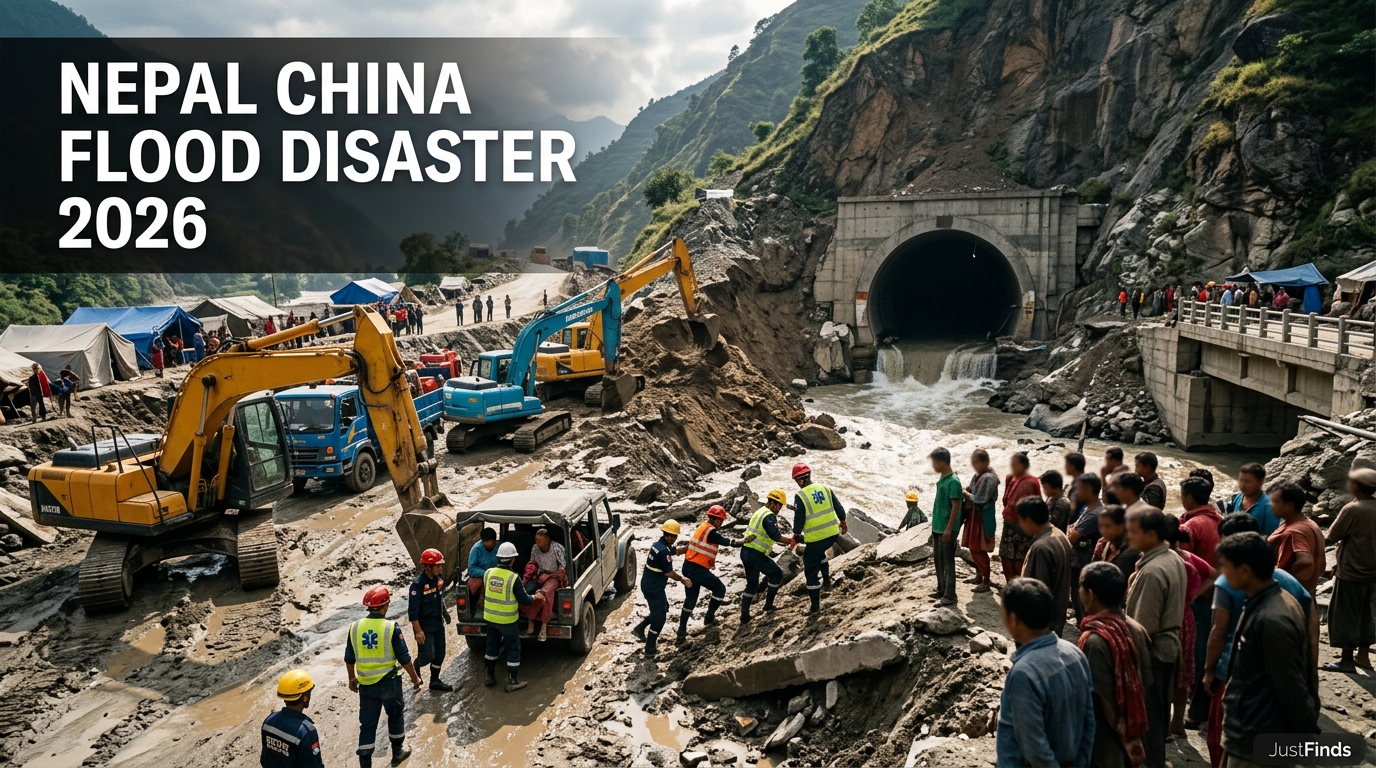
The combined death toll from the glacier-triggered floods in Nepal and Tibet stands between 674 and 682 as of August 29, 2026, with nearly 3,000 people officially reported missing. A massive glacial collapse at 5,200 meters altitude sent a wall of ice and debris through the Trishuli River basin, causing an estimated $5 billion in damages.
The 2026 Himalayan Glacial Collapse: A Seismic Event
The disaster began on the morning of Wednesday, August 26, 2026, when a massive mass of ice, mud, and rock detached from a glacier at an altitude of 5,200 meters. The sheer volume of the falling debris created a kinetic force so intense that it mimicked a tectonic event.
Initial readings from global monitoring stations suggested a magnitude 4.4 to 5.2 earthquake. The USGS later clarified that these tremors were the seismic signal generated by the landslide itself. The resulting surge tore through the Lende River, gaining momentum as it entered Nepal’s Rasuwa, Nuwakot, and Dhading districts.
The speed of the disaster gave downstream communities almost no time to react. In the Trishuli River, the water level rose by a staggering 9 meters in just 30 minutes. This wall of water obliterated everything in its path, including homes, vital bridges, and several high-priority hydropower projects. If you are in a downstream district, monitor the Department of Hydrology and Meteorology (DHM) real-time river gauges; any sudden drop in water level can signal an upstream blockage, while a rapid rise necessitates immediate evacuation to ground at least 20 meters above the riverbed.
Nepal and China Flood Disaster 2026: Death Toll and Missing Count
Reporting from the ground remains fluid as search and rescue teams reach isolated valleys. In Nepal, the confirmed death toll fluctuates between 669 and 675. The scale of the missing is even more daunting, with official counts ranging from 2,426 to 2,496 people in Nepal alone.
Across the border in the Tibet Autonomous Region of China, authorities report between 5 and 7 confirmed deaths, while 554 to 558 people remain missing. These figures represent one of the most severe natural disasters the region has faced in the modern era.
The missing count includes a high number of foreign nationals. Approximately 90 to 100 Americans are currently unaccounted for. Among them are Raghu Rajan and Archana Suresh from Texas, last tracked near a bridge that was swept away, and Deepak and Madhu Ahuja of Plano, Texas, who were on a pilgrimage to Mount Kailash. Additionally, 32 Canadians and hundreds of international trekkers are still being sought.
To manage the identification of victims, hospitals in Kathmandu have resorted to pinning photographs of unidentified bodies on public notice boards. Families searching for missing relatives should contact the District Administration Office (DAO) in Rasuwa or the Nepal Red Cross Society’s Restoring Family Links (RFL) department to register DNA profiles or provide identifying marks.
| Impact Category | Nepal Statistics | Tibet/China Statistics | | :--- | :--- | :--- | | Confirmed Deaths | 669 - 675 | 5 - 7 | | Missing Persons | 2,426 - 2,496 | 554 - 558 | | Total Rescued | 3,700+ | ~3,800 | | Economic Loss | ~$5 Billion (Total) | Included in Regional Estimates | | Primary Basin | Trishuli River | Lende River |
The Tunnel Rescue Operation: Trishuli 3A and 3B
A critical rescue operation is currently focused on the Trishuli 3A and 3B hydropower sites. More than 100 workers were trapped underground when the floodwaters forced mud and debris into the tunnel entrances. Reaching them requires a high-stakes technical protocol:
- 1Air Supply: Rescue teams first broke through hardened mud crusts at the 3A site to pump fresh oxygen into the shafts, keeping survivors alive in air pockets.
- 2Visual Confirmation: Specialized snake cameras provided by Chinese specialists are being fed through narrow gaps to locate the exact positions of trapped staff.
- 3Manual Excavation: Because the ground remains unstable, heavy machinery is often too dangerous. Nepal has requested "rat-hole" miners from India to use precision hand-digging techniques to clear paths.
- 4Dewatering: High-capacity pumps are working around the clock to remove water and prevent secondary drowning as rescuers move closer to the survivors.
For families of workers, the Nepal Electricity Authority (NEA) has established a dedicated information desk at their Kathmandu headquarters to provide hourly updates on tunnel clearance progress.
Managing the Barrier Lake: Preventing a Second Surge
The geological collapse created a new, unstable barrier lake at the site of the initial landslide. This plug of debris holds back millions of gallons of water, creating a constant threat of a secondary Glacial Lake Outburst Flood (GLOF).
Search efforts were briefly suspended earlier this week when sensors indicated the barrier might burst. After a risk assessment, operations resumed. Experts are focusing on manual drainage, using hand tools to create controlled channels. This slow release of water is designed to lower the lake level without triggering a sudden collapse of the debris dam. Residents in Nuwakot should maintain a "go-bag" with three days of dry rations and copies of citizenship documents, as the risk of a breach remains until the lake level drops by at least 15 meters.
The Economic Toll: Rebuilding a Broken Infrastructure
Nepal’s Finance Minister has estimated that the cost of reconstruction will range between $4 billion and $5 billion. This is a massive blow to a nation that relies heavily on its hydropower corridor for both domestic energy and export revenue. The damage to the Trishuli power plants has paralyzed a significant portion of the national grid.
International aid is scaling up. The United States increased its initial emergency funding from $500,000 to $3.6 million. Other nations, including India, China, Australia, and South Korea, are providing technical expertise, search teams, and financial support through the UN and Red Cross. To ensure funds reach the intended projects, the Ministry of Finance is implementing a real-time tracking portal for all foreign disaster aid, similar to the system used after the 2015 earthquake.
Survival and Logistics: The Nepali Army’s Heroic Response
The Nepali Army has launched a massive aerial lifeline, conducting up to 500 helicopter sorties per day. This averages roughly 15 trips per hour, transporting food, medicine, and the injured. To date, over 7,500 people have been rescued across the affected regions.
Among the thousands of stories, the rescue of an 8-year-old girl has become a symbol of hope. Video of her extraction and subsequent reunion with her mother has gone viral, offering a brief moment of relief in a week defined by tragedy. The search continues for hundreds of pilgrims who were traveling the Mount Kailash route when the surge hit. For those wishing to assist, the Prime Minister’s Disaster Relief Fund is the primary channel for monetary donations, which are currently being prioritized for the purchase of cold-weather tents and water purification tablets for the 15,000 displaced residents in Rasuwa.
The scale of the $5 billion reconstruction cost highlights the extreme vulnerability of Himalayan hydropower. While the immediate focus remains on the 3,000 missing individuals and the tunnel rescue at Trishuli, the long-term recovery will require a total rethink of how infrastructure is built in these high-altitude zones. The move to use Indian rat-hole miners shows that in the face of such massive geological shifts, human-led precision often outweighs heavy machinery.
Frequently asked questions
›What caused the flood in Nepal and China on August 26, 2026?
A massive collapse of a glacier at 5,200 meters involving ice, mud, and rock triggered a surge through the Lende and Trishuli rivers. The collapse was so violent it registered as a seismic event between magnitude 4.4 and 5.2, though the USGS confirmed the landslide itself caused the shaking, not a tectonic earthquake.
›How many people are confirmed dead in Nepal?
As of August 29, 2026, the death toll in Nepal is reported between 669 and 675. These numbers remain fluid as rescue teams reach isolated districts like Rasuwa and Nuwakot. Authorities in Kathmandu are currently using photo boards at hospitals to help families identify victims recovered from the river banks.
›How many people are missing in total?
Approximately 3,000 people are missing across both regions. Nepal reports between 2,426 and 2,496 people unaccounted for, while Tibet/China reports between 554 and 558 missing. These figures include local residents, hydropower workers, and a significant number of international tourists who were trekking or on religious pilgrimages at the time.
›Are there Americans missing in the Nepal floods?
Yes, between 90 and 100 Americans are currently missing. Notable cases include the Rajan and Suresh families from Texas, last seen near a bridge in the surge path, and the Ahuja family from Plano, who were on a pilgrimage to Mount Kailash. The US embassy is working with local authorities.
›What is the status of the Trishuli hydropower tunnel rescue?
Specialized teams are working to save over 100 workers trapped in the Trishuli 3A and 3B tunnels. Indian 'rat-hole' miners are performing manual excavation, while Chinese experts use snake cameras to locate survivors. Oxygen is being pumped through mud layers to sustain those trapped in subterranean air pockets.
›Did an earthquake cause the landslide?
No, the landslide caused the seismic signal. While initial reports indicated a magnitude 4.4 to 5.2 earthquake, the USGS later clarified that the massive collapse of ice and rock—estimated to be dozens of times the size of the Empire State Building—created the vibrations detected by seismometers in the region.
›What is the estimated cost of rebuilding?
Nepal’s Finance Minister estimates the total reconstruction cost at between $4 billion and $5 billion. This includes the restoration of destroyed homes, bridges, and the heavily damaged hydropower corridor along the Trishuli River, which is vital for the country's energy production and economic stability.
›Is there a threat of a second flood?
A barrier lake formed at the collapse site, creating fears of a secondary Glacial Lake Outburst Flood (GLOF). While search efforts were briefly paused, the risk was downgraded. Experts are now using hand tools for manual drainage to slowly lower the water level and prevent a catastrophic breach.
›How much aid has the US provided?
The United States government has significantly increased its support as the scale of the disaster became clear. The initial aid package of $500,000 was raised to $3.6 million. This funding is being used for emergency relief, search and rescue logistics, and supporting displaced families in the affected districts.
›How many people have been rescued so far?
Over 7,500 people have been rescued in total across Nepal and Tibet. In Nepal specifically, more than 3,700 individuals have been saved. The Nepali Army is playing a lead role, conducting roughly 500 helicopter sorties per day to evacuate survivors from remote, cut-off mountainous areas.
Sources referenced
- Nepal and China resume flood rescue as death toll ...
- Nepal flood death toll rises to 675 as nearly ...
- Rescuers search for thousands following deadly Nepal- ...
- Nepal flood death toll surpasses 600, with more than ...
- Nepal floods: Death toll and number of missing grows in ...
- Nepal flood rescue efforts intensify as death toll rises, with ...
- Nepal flash floods LIVE: Rescuers claw through mud as ...
- Nepal-China flood survivors reach safe areas as families ...
More in News
India Flood Preparedness 2026: State-Wise Alerts, Relief Helplines and a Practical Family Safety Checklist
Stay safe during the 2026 monsoon with our guide to India's new flood warning systems, state helplines, and a professional-grade home evacuation checklist.
World Natural Disasters Right Now (August 2026): Live Flood, Landslide, and Storm Emergencies
Global emergencies peak in August 2026 with a massive Nepal glacial collapse, Cyclone Dolphin, and a 7.4 earthquake in Colombia as sea temperatures hit record highs.
Nepal Glacial Flash Flood 2026 and the Bihar-UP Gandak Basin Alert: Causes, Downstream Risk and Preparedness
A catastrophic GLOF in Nepal has triggered a 9-meter surge, putting Bihar and Uttar Pradesh on high alert as a secondary lake threatens the Gandak basin.
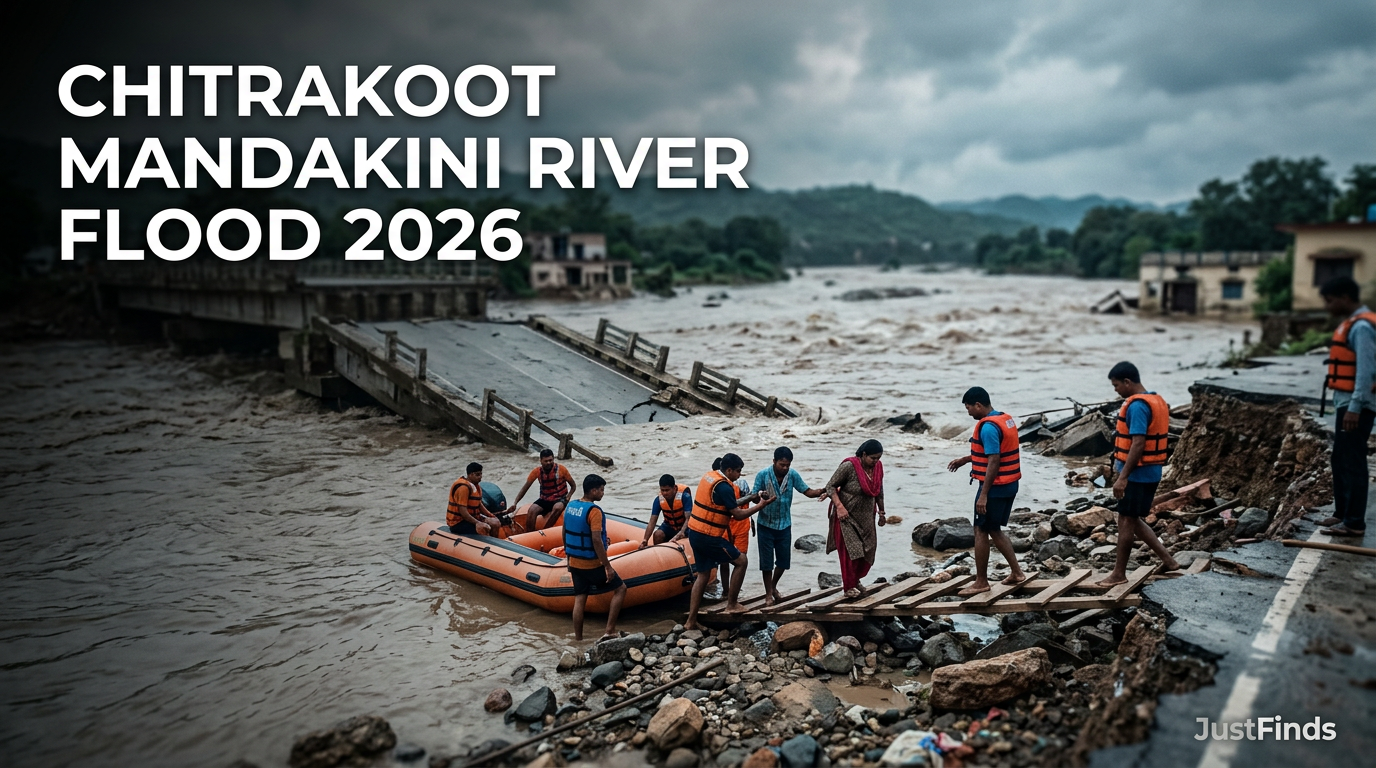
Chitrakoot Mandakini River Flood 2026: Bridge Washed Away and Rescue Updates
Mandakini River breaches 23-year record in Chitrakoot as Gorgi Dam failure washes away Ramghat bridge and triggers IAF-led rescue operations.