Assam and Brahmaputra Floods 2026: Death Toll, Relief Packages and What Families Need Now
The 2026 Assam floods have claimed over 100 lives, leaving 1.1 million displaced and dairy hubs like Nepalikhuti devastated by silt and livestock loss.
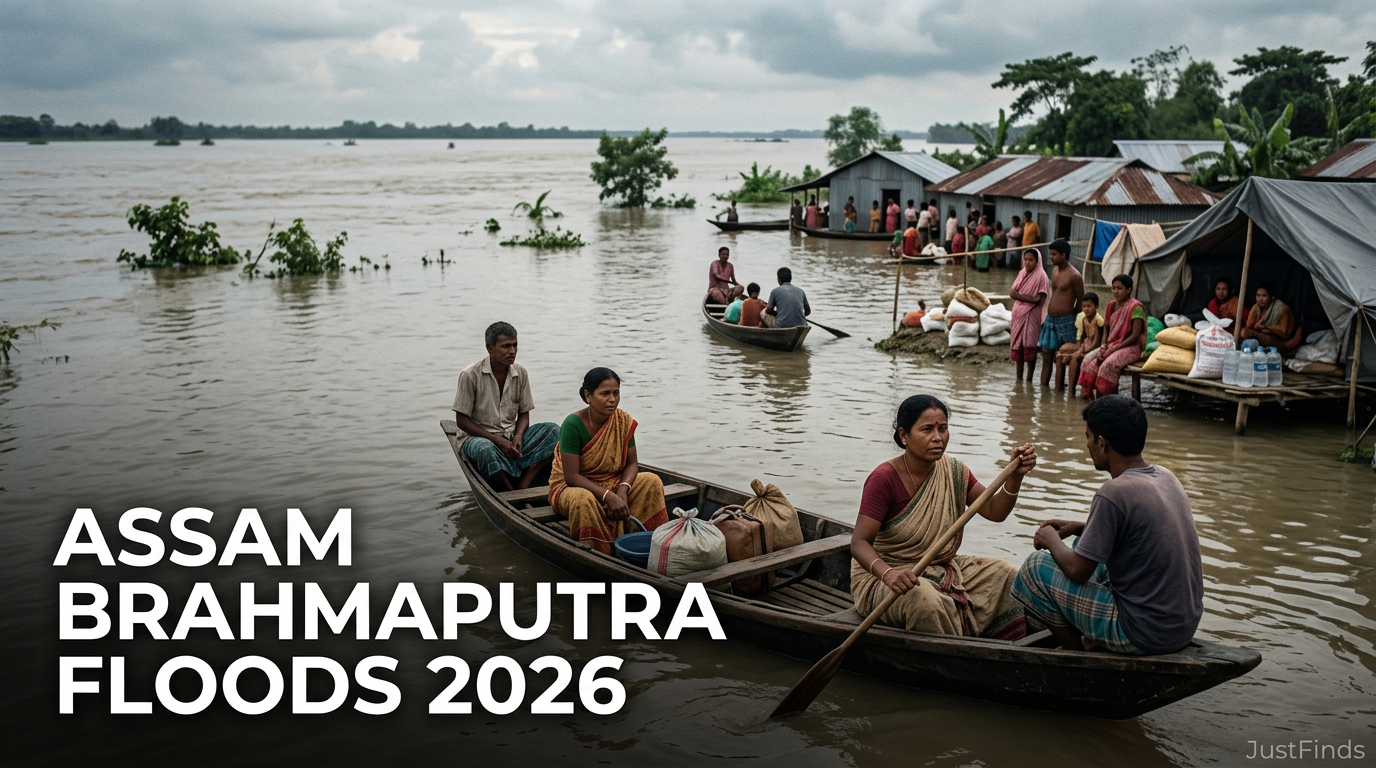
The 2026 Brahmaputra floods have killed 101 people and displaced 1.1 million residents across 25 districts as of mid-August. Families are currently eligible for ₹4 lakh ex-gratia payments, but the immediate crisis has shifted to a lack of potable water and the total loss of cattle in dairy regions like Nepalikhuti.
The 2026 Flood Crisis: A Timeline of the Brahmaputra’s Fury
The 900-kilometer stretch of the Brahmaputra River turned into a destructive torrent this monsoon. The crisis escalated from localized surges into a catastrophe that submerged 40% of Assam’s land area.
From Flash Floods to State-wide Inundation
- July 19, Midnight: A sudden surge in Sivasagar occurred as the Dikhou and Mitong rivers breached their banks, catching sleeping residents off guard.
- July 21–24: Intense monsoon rainfall triggered the main Brahmaputra channel to overflow, impacting downstream districts.
- August 10-11: The official death toll reached 101, confirming this as one of the deadliest seasons in recent years.
Actionable Advice: Residents in low-lying districts should install solar-powered emergency radios. During the July 19 surge, cellular networks failed, leaving those without offline communication tools unable to receive evacuation orders.
Death Toll and Impact: By the Numbers
The human cost of the 2026 season is staggering. With 101 confirmed deaths, the fatality rate has nearly tripled compared to the 36 deaths recorded in 2025, though it remains slightly below the 110 deaths seen in 2024.
Displacement figures remain fluid due to varying reporting standards. While some estimates suggest 700,000 people were affected, peak relief camp occupancy hit 300,000 during the height of the inundation. Beyond the immediate human toll, 119,000 hectares of cropland were submerged, wiping out the harvest for thousands of farmers.
| Feature | 2024 Flood Season | 2025 Flood Season | 2026 Flood Season | | :--- | :--- | :--- | :--- | | Confirmed Deaths | 110 | 36 | 101 | | Population Affected | ~1 million | ~400,000 | 1.1 million | | Cropland Lost (Hectares) | 102,000 | 45,000 | 119,000 |
Actionable Advice: Farmers losing crops should document damage with geo-tagged photos immediately as waters recede. This photographic evidence is required by local revenue officers to process Pradhan Mantri Fasal Bima Yojana (PMFBY) claims.
The Nepalikhuti Tragedy: A Case Study in Rapid Inundation
Nepalikhuti village serves as a grim example of how quickly the 2026 floods turned lethal. In this dairy-farming hub, 10 people lost their lives as the water rose with unprecedented speed.
Residents reported a 20-minute window where water moved from courtyard level to chest height. This left virtually no time for evacuation or to save livestock. Approximately 5,000 cows were swept away in this single village, effectively erasing the community's primary source of income.
Receding waters have offered little relief. Homes are currently buried under one to three feet of silt, mud, and debris carried from the hills of Nagaland. Families are now tasked with the grueling job of excavating their own living rooms from thick sludge.
Actionable Advice: To prevent structural collapse during silt removal, residents should avoid using heavy machinery inside mud-brick homes. Manual shoveling, while slower, prevents the vibration-induced wall failures seen in three Nepalikhuti homes last week.
Relief Packages and Government Response
The state government has moved to provide immediate financial cushions, though the scale of the disaster has tested administrative limits.
Financial Aid and Compensation
The Chief Minister announced an ex-gratia payment of ₹4 lakh (400,000 INR) for the families of those who died in the floods. Additionally, interim monetary support has already been processed for approximately 50,000 affected individuals to cover basic necessities.
The Conflict of Data
There is a notable discrepancy in how the scale of the 2026 floods is being reported. The ASDMA bulletin initially cited 456 affected villages, whereas international reports and official figures cited by some agencies suggest up to 2,690 villages have been impacted. Similar gaps exist in camp data, with some sources reporting 52 camps and others citing over 300.
Actionable Advice: If your village is not listed on the official ASDMA affected list, submit a written petition to the Circle Officer (CO) within 7 days. Official aid is strictly tied to these village lists.
Beyond Rations: What Affected Families Need Now
Standard dry rations are no longer enough for families returning to silt-covered ruins. The following items are critical for immediate survival and recovery:
- Safe Drinking Water: Floodwaters have contaminated traditional groundwater wells. Mobile filtration units and chlorine tablets are the highest priority.
- Dignity and Health: Women in relief camps urgently require "Dignity Kits" containing sanitary pads and hygiene items. Psychosocial support is also needed to address the trauma of sudden loss.
- Nutritional Intervention: Displacement has led to signs of malnutrition. Packaged relief meals must be fortified with vitamins and minerals to prevent a secondary health crisis.
- Shelter Rebuilding: As families salvage wreckage, there is a massive demand for new roofing sheets and basic building materials to create temporary shelters on higher ground.
Actionable Advice: Use Halazone or chlorine tablets for all water, even for washing utensils. In the 2026 camps, waterborne skin infections have spiked because residents only used treated water for drinking, not for general hygiene.
The "Man-Made" Debate: Why 2026 Was So Severe
The severity of the 2026 floods has sparked intense debate. The Assam Chief Minister attributed the surge to a cloudburst in Nagaland; however, the India Meteorological Department (IMD) debunked this claim, pointing instead to sustained heavy rainfall.
Environmental experts highlight that unregulated coal, sand, and boulder mining in the hills has stripped the land of its natural defenses. Massive deforestation has allowed rainwater to carry heavy loads of silt into the Brahmaputra’s tributaries, raising riverbeds and making even moderate rains dangerous.
Actionable Advice: Community leaders should advocate for the planting of Vetiver grass along local embankments. Vetiver has deep root systems that stabilize soil better than standard monsoon grass, reducing the likelihood of minor breaches during riverbed siltation.
Step-by-Step: The Path to Recovery for Displaced Families
- 1Rapid Needs Assessment (RNA): Multidisciplinary teams from organizations like NEADS are visiting remote villages to identify the most vulnerable households.
- 2Silt Clearance: Families must manually remove feet of mud from their homes before any rebuilding can begin.
- 3Livelihood Diversification: With thousands of cows lost, farmers are being encouraged to look at alternative income sources while waiting for livestock replenishment programs.
- 4Resilient Rebuilding: Future construction must prioritize elevated platforms, as 40% of the state remains permanently flood-prone.
Actionable Advice: When rebuilding, construct 'Chang Ghars' (stilt houses) with a minimum floor height of 5 feet. Data from the 2026 floods showed that houses built on traditional raised bamboo stilts suffered 80% less interior damage than concrete ground-level structures.
Frequently asked questions
›What is the current death toll of the 2026 Assam floods?
As of August 10–11, 2026, the official death toll has reached 101 individuals. This marks a significant increase from the 36 deaths recorded in 2025, though it is slightly lower than the 110 casualties reported during the 2024 flood season. Additionally, 12 people remain missing or untraced across the state.
›How much compensation is the Assam government providing to victims' families?
The Assam government has announced an ex-gratia payment of ₹4 lakh (400,000 INR) for the families of those who lost their lives in the floods. Furthermore, approximately 50,000 people have received interim monetary support to help cover immediate costs for food, clothing, and temporary shelter materials.
›Which districts were most affected by the Brahmaputra overflow?
Between 10 and 25 districts were impacted by the 2026 floods. Sivasagar saw early flash flooding on July 19 due to the Dikhou and Mitong rivers breaching banks. Other areas along the 900km stretch of the Brahmaputra faced severe inundation following heavy rains between July 21 and July 24.
›Why did the water rise so quickly in villages like Nepalikhuti?
In Nepalikhuti, water rose from courtyard level to chest height in just 15 to 20 minutes. This rapid inundation was caused by the Brahmaputra’s tributaries overflowing, carrying massive amounts of debris and silt from the hills of Nagaland, which accelerated the volume and speed of the incoming floodwaters.
›What are the primary causes of the 2026 floods according to experts?
Experts point to a combination of climate change, large-scale deforestation, and unregulated mining of coal and sand. While the state government suggested a cloudburst in Nagaland was the cause, the IMD debunked this, highlighting that environmental degradation has reduced the land's ability to absorb heavy monsoon rainfall.
›How many people are currently living in relief camps?
At the peak of the floods, approximately 300,000 people were forced into relief camps. However, specific camp numbers vary by source; some reports suggest 8,000 people remain in 52 camps, while others indicate over 120,000 people are still residing in more than 300 relief centers.
›What is a 'Dignity Kit' and why is it needed now?
A Dignity Kit contains essential hygiene items, including sanitary pads, soap, and undergarments. These are vital for displaced women and girls to maintain health and privacy in crowded relief camps. They are currently a top priority alongside clean water and psychosocial support for flood survivors.
›How has the flood affected Assam’s dairy and agricultural sectors?
The impact is catastrophic, with 119,000 hectares of cropland submerged. In the dairy hub of Nepalikhuti alone, 5,000 cows were swept away. This loss of livestock and crops has destroyed the primary livelihoods of thousands of families, creating a long-term food security and economic crisis.
›Is there a shortage of drinking water in the flood-affected areas?
Yes, there is an acute shortage. Floodwaters have submerged and contaminated groundwater wells with silt and bacteria. As families return to their homes, they find their primary water sources unusable, making the distribution of clean bottled water and filtration kits an urgent humanitarian need.
›How can NGOs and citizens contribute to the relief efforts?
NGOs like NEADS are focusing on Rapid Needs Assessments and distributing roofing sheets and hygiene kits. Citizens can contribute by donating to verified relief funds that provide 'Dignity Kits,' vitamins for malnourished children, and building materials to help families rebuild their homes on elevated, flood-resilient platforms.
Sources referenced
- Flood death toll in India's Assam reaches 100 as ...
- Assam floods expose a crisis beyond heavy rain
- July 2026: flash floods and landslides across South Asia. ...
- The death toll from this year's floods in Assam has risen ...
- Emergency Appeal: Assam Monsoon Flood Relief 2026
- Assam missing persons list after Nepal flash flood 2026
- 'We feared we'd all be drowned': the Indian floods that ...
More in News
India Flood Preparedness 2026: State-Wise Alerts, Relief Helplines and a Practical Family Safety Checklist
Stay safe during the 2026 monsoon with our guide to India's new flood warning systems, state helplines, and a professional-grade home evacuation checklist.
Nepal and China Flood Disaster 2026: Death Toll, Missing Count, Tunnel Rescue and Rebuilding Cost Explained
Massive glacial collapse in the Himalayas triggers a $5 billion disaster, leaving thousands missing and hundreds dead across Nepal and Tibet.
World Natural Disasters Right Now (August 2026): Live Flood, Landslide, and Storm Emergencies
Global emergencies peak in August 2026 with a massive Nepal glacial collapse, Cyclone Dolphin, and a 7.4 earthquake in Colombia as sea temperatures hit record highs.
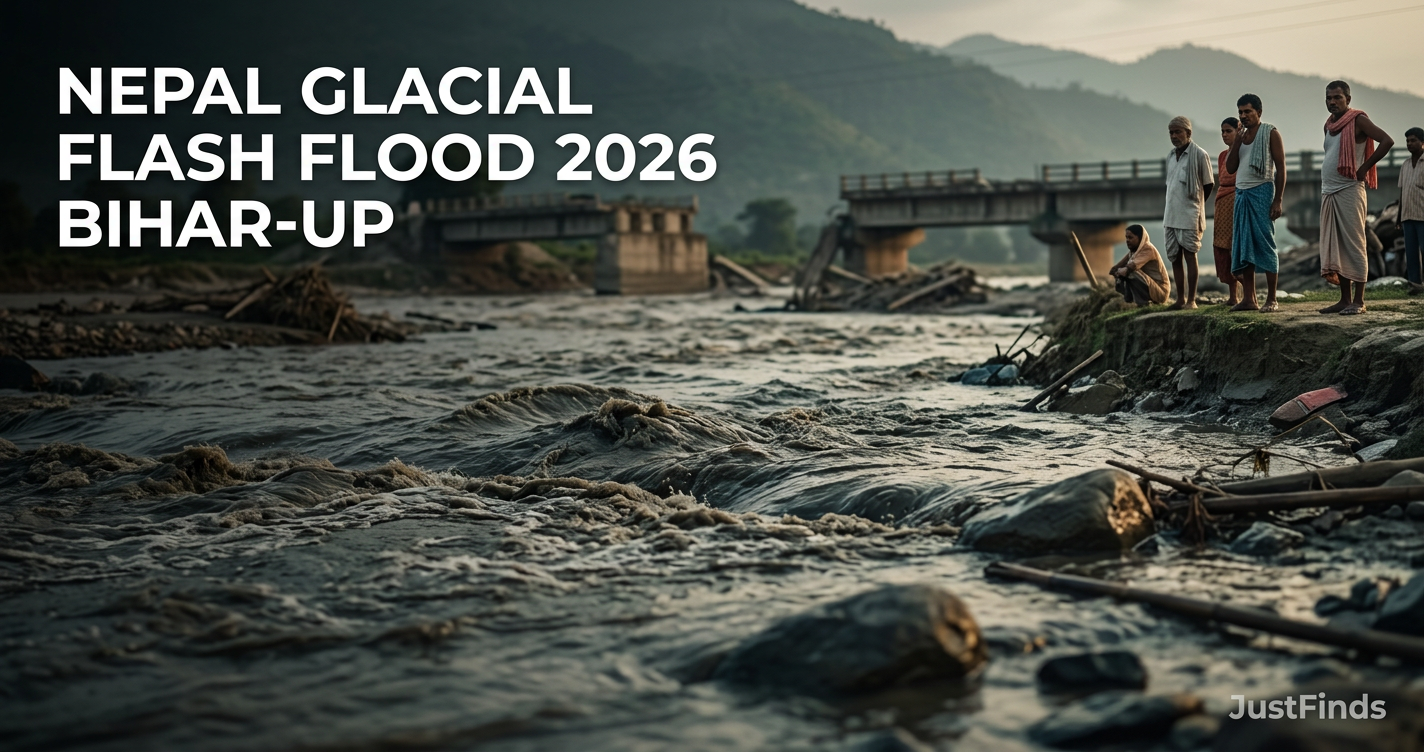
Nepal Glacial Flash Flood 2026 and the Bihar-UP Gandak Basin Alert: Causes, Downstream Risk and Preparedness
A catastrophic GLOF in Nepal has triggered a 9-meter surge, putting Bihar and Uttar Pradesh on high alert as a secondary lake threatens the Gandak basin.